NEWS
Draper Prize Winner Eric Fossum
Eric Fossum, Inventor of the Modern CMOS Sensor, Awarded the Draper Prize
In a landmark moment for engineering and imaging technology, Eric R. Fossum, the visionary behind the modern CMOS image sensor, has been awarded the 2026 Charles Stark Draper Prize for Engineering — one of the most prestigious honors in the field, often likened to a “Nobel Prize of Engineering.”
The announcement was made in early January 2026, with the National Academy of Engineering (NAE) selecting Fossum as the laureate for his groundbreaking work that fundamentally transformed the way the world captures and perceives images. The award ceremony and formal recognition events were held shortly thereafter, celebrating Fossum’s lifetime contributions to engineering and technology.
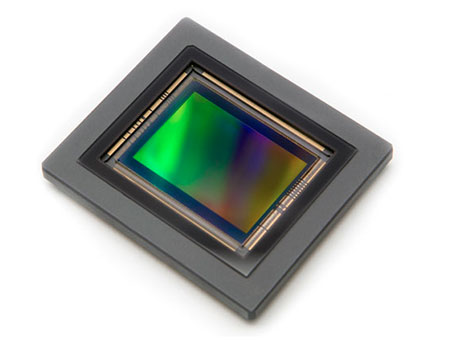
At its core, the Draper Prize honors engineers whose innovations have had profound impacts on society — improving quality of life, advancing technology, and shaping the way people live and work. Fossum’s invention certainly fits this mandate: his development of the complementary metal-oxide-semiconductor (CMOS) active pixel image sensor, often referred to as a “camera-on-a-chip,” made high-quality, low-power imaging technology compact and affordable enough for universal adoption.
The journey began in the early 1990s when Fossum, then working with NASA’s Jet Propulsion Laboratory, was tasked with miniaturizing space-borne imaging systems. Traditional charge-coupled device (CCD) sensors were too large, power-hungry, and impractical for small spacecraft. To address this, Fossum pioneered the CMOS active-pixel architecture, integrating amplification and processing functions directly into the sensor itself. This innovation slashed power consumption and drastically reduced size, paving the way for the ubiquitous imaging tools of today.
What followed was nothing short of a revolution. CMOS sensors now power billions of devices worldwide, from smartphones and action cams to professional mirrorless cameras, surgical imaging tools, automotive safety systems, industrial vision applications, and even spacecraft cameras. The ripple effect of Fossum’s work reaches into countless industries, enabling new forms of communication, entertainment, science, and safety that were once the stuff of science fiction.
In recognition of this monumental impact, the Draper Prize comes with a significant award and places Fossum among an elite roster of engineering innovators. Beyond this honor, Fossum’s career has included numerous accolades — including the National Medal of Technology and Innovation, induction into the National Inventors Hall of Fame, and earlier engineering prizes acknowledging the global significance of CMOS imaging.
Now serving as a professor and vice provost at Dartmouth College’s Thayer School of Engineering, Fossum continues to mentor the next generation of innovators and push the boundaries of imaging technology. His ongoing research includes work on next-generation image sensors capable of photon counting, hinting at a future where cameras might approach the sensitivity and dynamic range of the human eye.
The awarding of the 2026 Draper Prize to Eric Fossum not only honors an individual achievement but also celebrates a technology that has reshaped how humanity sees and records the world — from the vastness of space to the palm of your hand.
Eric Fossum and the CMOS Revolution
A Timeline of Innovation and a Simple Guide to How CMOS Sensors Work
Eric R. Fossum’s influence on modern imaging is so profound that it is almost invisible. Every smartphone photo, security camera clip, medical scan, and space probe image traces its lineage back to his work. Below is a clear timeline of Fossum’s key milestones, followed by an easy-to-understand explanation of how CMOS sensors differ from older technologies and why they changed the world.
Timeline: Eric Fossum’s Path to the Draper Prize
Early 1990s – The Problem at NASA
While working at NASA’s Jet Propulsion Laboratory (JPL), Eric Fossum faced a major challenge. Space missions needed cameras that were:
Extremely small
Highly reliable
Low in power consumption
The dominant imaging technology of the time, CCD (charge-coupled device) sensors, was too power-hungry, expensive, and bulky for future space exploration.
1993–1995 – Birth of the CMOS Active Pixel Sensor
Fossum proposed and developed the CMOS Active Pixel Sensor (APS) concept.
Instead of moving electrical charge across the sensor (as CCDs did), each pixel could:
Capture light
Amplify its own signal
Be read independently
This idea became known as the “camera-on-a-chip.”
Late 1990s – Commercial Adoption Begins
The CMOS concept moved beyond NASA labs and into commercial development. Early CMOS sensors were not perfect, but their advantages were undeniable:
Dramatically lower power usage
Smaller size
Lower manufacturing costs
2000s – CMOS Takes Over
Rapid improvements in image quality pushed CMOS sensors ahead of CCDs. By the mid-2000s:
Smartphones adopted CMOS exclusively
Consumer digital cameras followed
Industrial, automotive, and medical imaging switched rapidly
2010s – CMOS Becomes Universal
CMOS sensors became the backbone of:
Smartphones and mirrorless cameras
Autonomous vehicle vision systems
Medical imaging devices
Scientific instruments and satellites
At this point, CCDs were largely phased out of mainstream use.
2020s – Next-Generation Imaging
Fossum continued research into advanced sensor architectures, including:
Photon-counting sensors
Ultra-low-noise imaging
Human-eye-level sensitivity
2026 – Draper Prize for Engineering
In January 2026, Eric Fossum was awarded the Charles Stark Draper Prize for Engineering, recognizing the CMOS image sensor as one of the most impactful engineering inventions of the modern era.
CMOS vs CCD: A Simple Explanation
What Is a CCD Sensor?
A CCD sensor captures light at each pixel, then shifts all the electrical charge across the chip to a single output point.
Pros:
Excellent image quality (for its time)
Cons:
High power consumption
Slower readout speeds
Expensive to manufacture
Difficult to miniaturize
What Is a CMOS Sensor?
A CMOS sensor places amplifiers and readout circuits inside each pixel. Every pixel works independently.
Pros:
Much lower power consumption
Faster readout (great for video and burst shooting)
Smaller and lighter camera designs
Lower cost and higher scalability
Easy integration with digital electronics
Cons (early days):
Initially more noise than CCDs (later solved through innovation)
Why CMOS Changed Everything
The CMOS sensor made it possible to put a high-quality camera:
In every phone
In cars for safety and autonomy
In hospitals for diagnostics
In drones, robots, and spacecraft
Without CMOS technology, modern photography, social media, video streaming, AI vision, and autonomous systems would look radically different — or might not exist at all.
Why the Draper Prize Matters
The Draper Prize honors engineering achievements that fundamentally improve human life. Fossum’s CMOS sensor did exactly that by democratizing imaging — turning cameras from specialized tools into everyday companions used by billions of people worldwide.
Eric Fossum didn’t just invent a better sensor.
He redefined how humanity sees, records, and understands the world.
Photo Gallery

Submit your view
Please make judicious use of your language
Reader Comments (0)
No comments yet
Be the first to share your thoughts!