OM System PEN
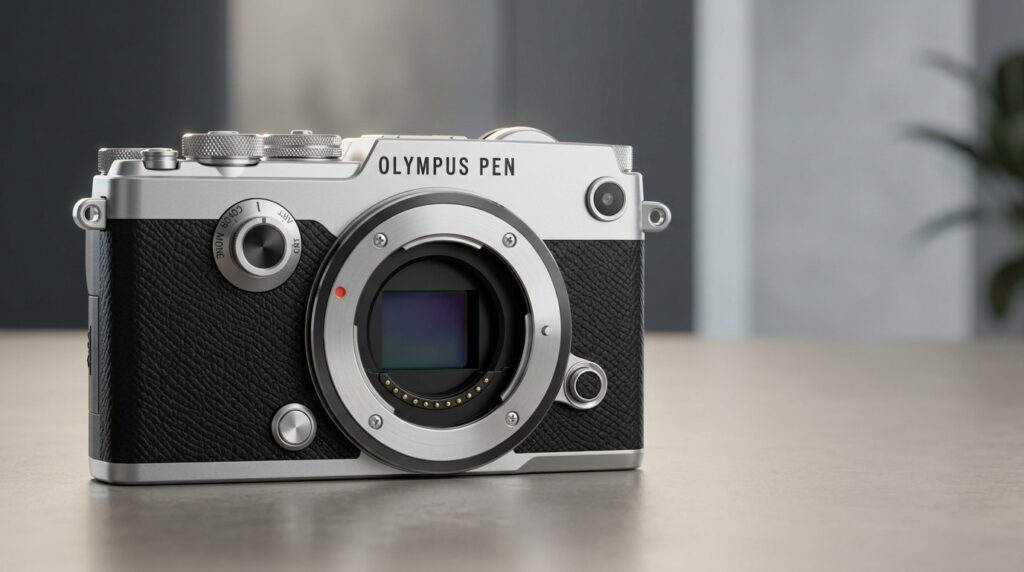
The OM System PEN is a small, nimble Micro Four Thirds camera built around a 20MP sensor, designed for travel and everyday shooting. It draws on the spirit of the classic PEN series but adds its own flavour rather than simply repeating history.
It isn't a one-to-one replacement for the 2016 PEN F, yet it carries over some of that model's thinking into a more budget-conscious segment.
Key specifications
Index What's new · How it compares · Body & handling · Autofocus · Image quality · Video · In use · Initial impressions · Sample gallery · Specifications · Press release
What's new
The PEN is the first top-tier entry in the line in five years, and the first time the series will be sold in North America in a decade. It's essentially a blend of the two models that preceded it: primarily the mid-priced E-P7 but also the enthusiast PEN-F.
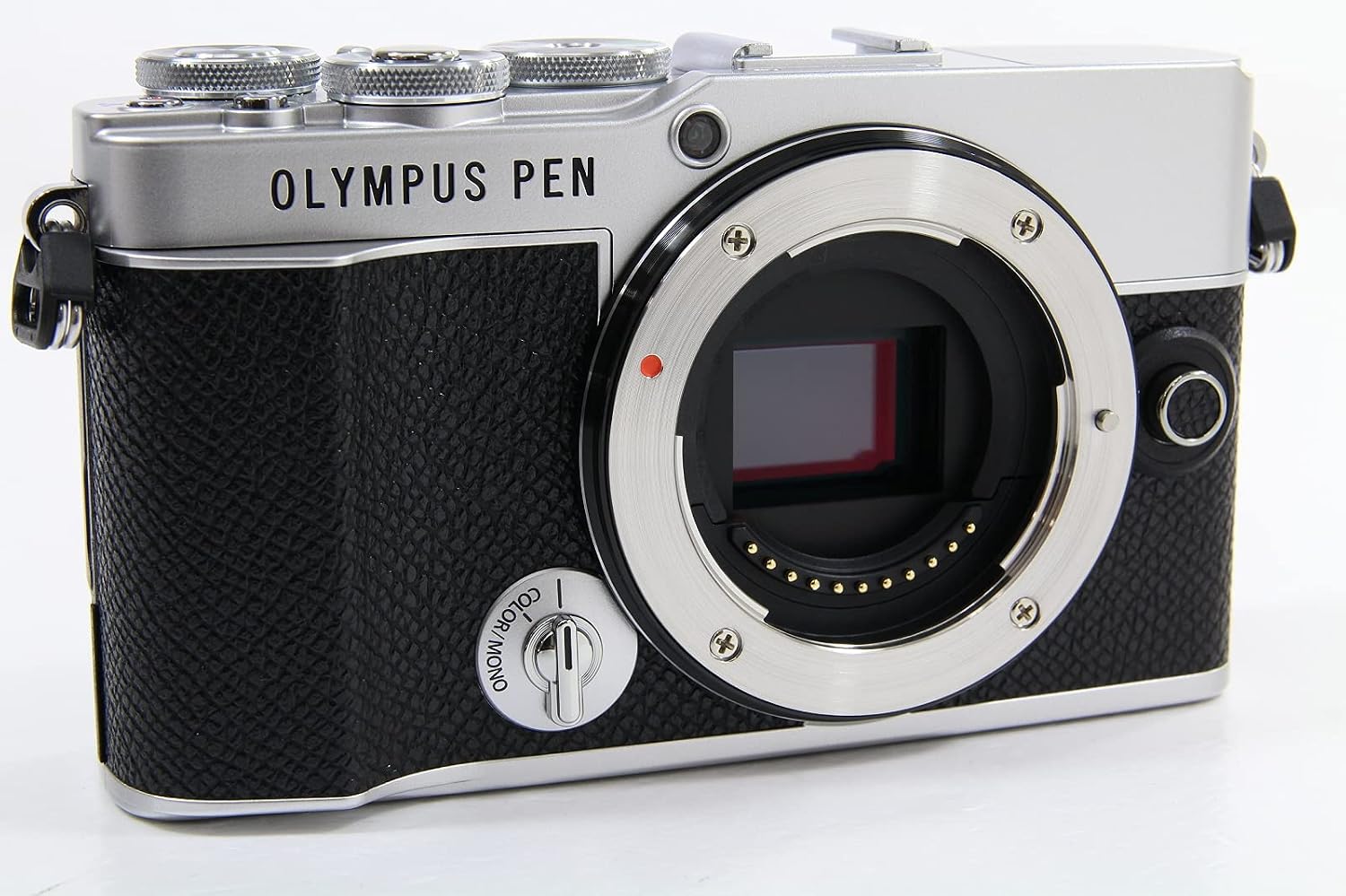
From the E-P7 it inherits the lighter, lower-cost plastic construction instead of the metal body that marked out the 'big' PENs before it. It also gets the two-position colour mode switch on the front plate, and the simpler dial layout. But crucially, from the PEN-F it gains an electronic viewfinder built into the top corner — making it only the second PEN model to feature one.
It also forgoes the stacked sensor features found in the OM-1 and OM-3 models, presumably to keep costs down, meaning it has more in common with the OM-5 II.
Colour modes: The PEN's colour mode switch gives you access to eight colour and mono modes that can be modified in interesting ways.
These changes start to make sense when OM System talks about its target audience: a mixture of enthusiasts who want a small mirrorless camera and users looking to buy their first camera for travel and everyday photography.
The lower-cost construction and significant overlap with the OM-5 II's componentry are reflected in its significantly lower launch price — enough of a difference that it's less expensive in monetary terms, despite a decade of inflation.
The ninth-generation TruePic processor means it gains more up-to-date autofocus than the PEN-F or E-P7 (now with Dogs & Cats recognition, rather than just human detection), but the camera is still limited to 8-bit video at up to 4K/30 and its multi-shot modes are less extensive and significantly slower than on more expensive stacked-sensor models such as the OM-3.
How it compares
There's no direct competitor to the OM System PEN if you're looking for a small, rangefinder-style mirrorless camera. You can either opt for a similarly-priced APS-C model, such as the Fujifilm X-T30 III or Nikon Z50 II, but those are both SLR-styled models with no image stabilisation. The alternative is the more expensive, metal-bodied X-E5, which is much more in keeping with the PEN's styling but closer to the PEN-F market positioning in terms of price.
Finally, if you just want a small, stylish camera and can live without the ability to change lenses, the Panasonic L10 comes into play.
| Model | OM System PEN | Fujifilm X-E5 | Panasonic L10 | Olympus PEN-F |
|---|---|---|---|---|
| MSRP (launch) | $999 / £899 | $1699 / £1299 / €1550 | $1500 / £1300 / €1500 | $1199 (≈$1690 in 2026) |
| Sensor | Four Thirds (224mm²) | APS-C (366mm²) | Cropped Four Thirds (183mm²) | Four Thirds (224mm²) |
| Resolution | 20.4MP | 40MP | 20.3MP | 20.4MP |
| Body | Engineering plastics | Aluminium | Metal | Magnesium alloy + aluminium |
| IBIS | 5.5 EV | 7.0 EV | Not specified (optical) | 5.0 EV |
| Multi-shot | High Res (hand/tripod), Live ND, Focus stacking, HDR, Multiple-Exp | No | High Res (tripod) | Multiple-Exp |
| EVF | 2.36M dots, 0.62x | 2.36M dots, 0.62x | 2.36M dots, 0.74x | 2.36M dots, 0.62x |
| Rear screen | 3", 1.04M, fully articulated | 3", 1.04M, tilting | 3", 1.84M, fully articulated | 3", 1.04M, fully articulated |
| Storage | 1× UHS-I SD | 1× UHS-II SD | 1× UHS-I SD | 1× UHS-I SD |
| Video | 4K/30 8-bit | 6.2K/30, 4K/60 10-bit | 5.2K/30 Open Gate, 4K/120 10-bit | 1080/60 8-bit |
| Headphone | No | Via adapter | No | No |
| USB | 2.0 (480Mbps) | 3.2g2 (10Gbps) | 3.2g2 (10Gbps) | 2.0 (480Mbps) |
| Battery life | 410 shots | 305 shots | 420 shots | 330 shots |
| Dimensions | 126×75×43mm | 125×73×39mm | 127×74×67mm | 125×72×37mm |
| Weight | 393g | 445g | 508g | 427g |
Despite its more modest pricing, the PEN stacks up pretty reasonably against its peers on paper. It's interesting to note that you get the same viewfinder panel regardless of how much you spend, because it's the only one made in this smaller size. The PEN is the only camera in this cohort to offer a standardised rating of environmental protection, even if it's the relatively modest IPX1 level.
However, while the PEN's multi-shot modes are more sophisticated than its (quasi) peers, its video is distinctly outdated. And though it doesn't necessarily show through in the specs, so are some aspects of its autofocus performance.
Body and handling
The PEN feels pretty solid, despite its construction primarily being engineering plastics rather than the metal casing used from the E-P1 up to the PEN-F. The body gives the sense of being made of quite thick material, meaning it feels suitably weighty in the hand without being overly heavy.
The small front grip and thumb rest make the camera easy to keep hold of, and we found the two (customisable) command dials to be well-placed, whether you're holding the camera to your eye or not.
The back of the camera is somewhat cluttered, though, with a CP button (accessing your choice of Computational Photography modes) next to the thumb rest being just one of six buttons crammed into the right-hand control array, in addition to a small four-way controller that is also used to access key features. In the absence of an AF joystick, this four-way controller, along with the camera's touchscreen, becomes the main method for positioning the AF point.
The PEN has a USB-C socket for charging and data transfer. It still has a single SD card slot, somehow still only supporting UHS-I cards. Its USB connector has been modernised to a Type C socket, but the underlying interface is still a distinctly dated 480Mbps USB-2.0 type. There's also a micro HDMI port and a mic input, but there's no headphone socket for audio monitoring, which should give a pretty clear signal about the PEN's focus.
As with the OM-5 II, the PEN does not support the excellent little FL-LM3 rotatable, bounceable flash, which is no longer made. However, there are alternatives such as Godox's iT30 and iT32/X5 combinations that provide small, flexible options.
Viewfinder
The PEN becomes only the second model in the series to feature a built-in viewfinder. It's the same 2.36M dot (1024 × 768px) finder as in the PEN-F, ten years ago. It's worth noting, though, that this is the highest resolution finder made in the smaller 0.39″ format, which is why we continue to see it appear in cameras where size is the key focus of the design.
Screen
The rear screen is the same, fully-articulated 1.04M dot touchscreen that featured on the PEN-F. This is likely to divide audiences, with some people interpreting flip-out screens as being a sop to video shooters. However, we've been told by multiple manufacturers that, in surveys, about 50% of photographers prefer this screen arrangement. So, while street and candid shooters are likely to miss the tilting screen that allows more discreet camera operation, the wider target audience, looking to use the PEN for travel, are likely to appreciate the ability to fold the screen inwards, to keep it protected.
Battery
The PEN uses a new battery pack, the rather compact BLS-7. It's a 7.74V, 1285mAh unit, which means it has a capacity of 10Wh, rather than the 8.7Wh of the older, physically larger BLS-50 or the 9.0Wh of the PEN F's BLN-1.
OM System says this delivers a battery rating of 400 shots per charge, when tested using the standard CIPA method, presumably based on the use of the more power-efficient rear screen. As usual, these ratings tend to significantly underestimate the real-world endurance of a battery, and getting twice the rated number is pretty common, depending on how you shoot.
👍 Strengths
- Compact, lightweight body with EVF
- Excellent 5.5EV IBIS
- Advanced computational modes (Live ND, High Res)
- Attractive price point
- Human / Dog / Cat AF recognition
- IPX1 weather resistance
👎 Weaknesses
- Outdated 8-bit 4K/30 video
- No headphone jack
- UHS-I only card slot
- USB 2.0 speeds
- Plastic body vs metal predecessors
- Autofocus performance lags behind rivals
Initial impressions
The OM System PEN is a thoughtful reimagining of a beloved series. It trades metal for engineering plastics and bleeding-edge video for affordability, but it keeps the soul of the PEN alive with a built-in EVF, excellent stabilisation, and a suite of computational features that punch above its price. For travellers and everyday shooters who value compactness and character over spec-sheet bravado, it's a compelling option — even if videographers and action shooters should look elsewhere.
— Full specifications and press release available on request.
Review based on manufacturer information and initial testing. Pricing and availability may vary by region.
Submit your view
Please make judicious use of your language
Reader Comments (0)
No comments yet
Be the first to share your thoughts!